


The way Intel marketed the Core Ultra 200S Plus after announcing the chips in March 2026 is instructive. AI played a major role in the October 2024 launch of the original Core Ultra 200S, including NPUs, AI PCs, the future of intelligent computing, and all the trendy and anticipated terminology. Nearly all of that was removed in the Plus update. Gaming was discussed in the press materials. The visual language of a business that had considered its sales numbers and made a decision was evident in the promotional imagery, which had a younger aesthetic and brighter packaging. As a business, Intel reacts to the real market conditions. For some time now, PC gamers have been selecting AMD. Intel’s most overt attempt in years to persuade them to change their minds is the Core Ultra 200S Plus.
This argument begins with the pricing. At launch, the Core Ultra 7 270K Plus costs $299. The price of the Core Ultra 5 250K Plus is $199. These numbers are not only competitive, but they also signify a significant change in Intel’s strategy for competing in the desktop CPU market by opting to lead with value rather than premium. At launch, the Core Ultra 9 285K was priced at $589. The difference between $589 and $199 is more than just a price difference; it’s a statement about who Intel believes it needs to win back and how. It is now evident that Intel is directly addressing the gamer on a mid-range budget who is watching benchmarks on YouTube and determining whether to go blue or red.
Key Information: Intel Core Ultra 200S Plus Series (Arrow Lake Refresh, 2026)
| Product Line | Intel Core Ultra 200S Plus — Arrow Lake Refresh desktop processors (announced March 11, 2026) |
| Launch Date | March 26, 2026 — available via Intel retail partners and OEM systems |
| Key Models | Core Ultra 5 250K Plus ($199) and Core Ultra 7 270K Plus ($299); KF variants available (no integrated GPU) |
| Core Configuration (U7 270K Plus) | 24 total cores: 8 Performance + 16 Efficiency; 900 MHz speed boost over predecessor (Core Ultra 7 265K) |
| Core Configuration (U5 250K Plus) | 18 total cores: 6 Performance + 12 Efficiency — 4 additional E-cores vs. predecessor |
| Gaming Performance Claim | Up to 15% faster gaming than previous Core Ultra desktop generation; Intel’s fastest gaming desktop CPU ever (per Intel) |
| Creator Performance Claim | Up to 2x faster content creation vs. competing CPUs in same price segment |
| Multithread Performance | Up to 103% better multithread performance vs. competing CPUs in segment |
| Key New Feature | Intel Binary Optimization Tool — software layer improving native game performance without hardware changes |
| Memory Support | Native DDR5 at 7200 MT/s (up from 6400 MT/s); overclockable to 8000+ MT/s with CUDIMM DDR5 |
| Motherboard Socket | LGA 1851 — compatible with existing Z890 / Intel 800-series motherboards (no new board required vs. original 200S) |
| Original Core Ultra 200S Launch | October 10, 2024 — first NPU-enabled enthusiast desktop processors; led by Core Ultra 9 285K ($589) |
| Original 200S Power Reduction | Up to 58% lower package power in everyday tasks; up to 165W lower system power while gaming vs. prior gen |
| Key Reference | XDA Developers — detailed coverage of specs, pricing, and architectural changes |
Although the performance claims are ambitious, they should be carefully examined before being taken at face value. According to Intel, the Core Ultra 7 270K Plus offers up to 103% better multithread performance than rival CPUs in the same price range and up to 15% faster gaming performance than its predecessor. Even more startling is the creator performance claim, which states that content can be created up to twice as quickly as competitors. The “up to” qualifier does a lot of work in any benchmark headline, and these figures are derived from Intel’s own testing, which differs from independent verification. The more accurate measure will be what independent reviewers actually discover in prolonged real-world workloads across a variety of titles, resolutions, and use cases. It’s possible that these chips outperform those of earlier generations in terms of performance. It’s also possible that under more practical circumstances, the gap closes.
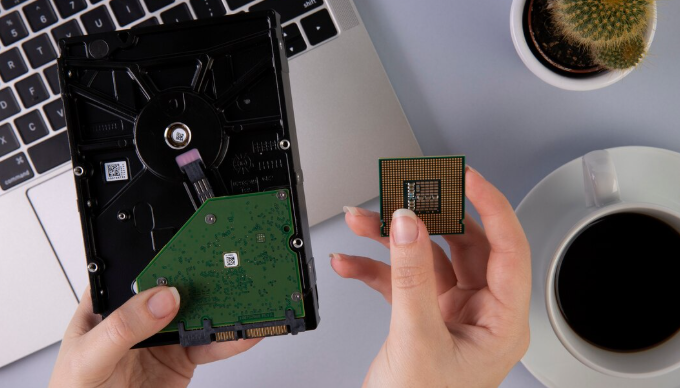
Despite not being revolutionary, the Plus refresh’s architectural backstory is intriguing. The 270K Plus has 24 total cores—8 performance and 16 efficiency—after adding four more efficiency cores to the U5 and U7 models. For DDR5, memory support increases from 6400 MT/s to a native 7200 MT/s, with overclocking headroom utilizing CUDIMM modules to surpass 8000 MT/s. Anyone who purchased the original Core Ultra 200S platform with a Z890 or other 800-series motherboard can install one of these chips without having to rebuild their system because the socket remains the same (LGA 1851). For current Intel owners thinking about upgrading without the expense and inconvenience of a complete platform switch, this compatibility is truly helpful.
The most peculiar aspect of this launch is the Binary Optimization Tool. According to Intel, it is a binary translation layer that can enhance native performance in specific games without requiring hardware modifications. To put it simply, it is a software layer that sits between the processor and games, optimizing instructions in real time to get more performance out of the same silicon. The strategy is similar to AMD’s use of software-level optimizations and Apple’s Rosetta 2 translation layer, which made x86 apps run remarkably well on Apple Silicon when the M1 was introduced. Hands-on testing will determine whether Intel’s version produces comparable results or if it is more of a marketing narrative that yields modest gains in a limited number of titles. While not revolutionary, early footage of Cyberpunk 2077 running on the 270K Plus showed frame rates increasing from 75 to 82 FPS at 4K Ultra.
It’s difficult to watch this launch without feeling the unique burden of a business that is aware of its challenges. For many years, Intel dominated the desktop CPU market. Choosing Intel for a gaming system didn’t require much reasoning for the majority of computing history. That was altered years ago by AMD with its Ryzen architecture, and the disparity has remained persistent and noticeable ever since.
Nova Lake, the next significant architectural advancement that fans are already debating in forums and comment sections, is not the Core Ultra 200S Plus. It is an update based on current silicon that brings better pricing and optimized software to a market that Intel needs to stop losing. It is still genuinely unclear if $199 and a Binary Optimization Tool will be sufficient to make a significant impact on the audience that matters most. The chips are authentic. The claims are substantial. As usual, the real story will be revealed by the benchmarks.
