


When most Americans first heard the phrase “Alligator Alcatraz,” it sounded more like a line written for cable news than a policy. Last summer, the attorney general of Florida delivered it with a half-smile while pointing to a long-forgotten Everglades airstrip. The name became well-known in a matter of days. The place was closing down in ten months.
That trajectory, from spectacle to shutdown, reveals something about the recent development of American immigration policy. The fact that Ron DeSantis staked a significant portion of his post-presidential identity on the project also speaks volumes about him. With the kind of fanfare typically associated with stadiums, the detention facility opened in early July 2025. President Trump arrived by plane. Pythons were the subject of jokes. Heat shimmer, swamp grass, and chain-link were all shown from above. It was made to be seen in every way that could be observed.
| Information | Details |
|---|---|
| Facility Name | South Florida Detention Facility (nicknamed Alligator Alcatraz) |
| Location | Dade-Collier Training and Transition Airport, Ochopee, Florida |
| Distance from Miami | Roughly 50 miles west |
| Opened | Early July 2025 |
| Built In | Eight days, late June 2025 |
| Designed Capacity | Around 3,000 detainees |
| Site Size | 39 square miles of mostly abandoned airfield |
| State Authority | Florida Division of Emergency Management |
| Governor at Launch | Ron DeSantis |
| Reported Operating Cost | Approaching $1 million per day |
| Federal Reimbursement Requested | Approximately $608 million (unpaid as of closure) |
| Status (May 2026) | Winding down operations |
| Closure Trigger | Court order, mounting costs, political fatigue |
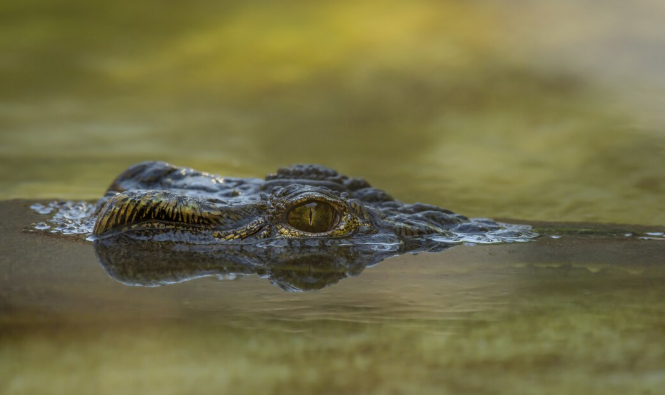
Visibility is a two-way street. The cameras remained there once they got comfortable. Reporters began tallying beds. Attorneys began submitting motions. Families began receiving calls from within. Yaneisy Fernandez told the BBC about one such call, in which her son informed her in Spanish that he had been taken to “the facility of the crocodiles.” The image stuck. Walking back was difficult.
The center was always more concept than infrastructure, and it was constructed in eight days on a 39-square-mile airfield that was once thought to be the biggest airport in the world. Tallahassee made the argument that when the perimeter was made up of wetlands and apex predators, you didn’t really need a perimeter. That argument has a certain grim cleverness to it. It didn’t survive contact with reality for another reason.
Depending on who was counting, daily operating expenses approached a million dollars. Florida requested reimbursement from Washington totaling about $608 million. Despite their political affinities, Washington did not write the check. More than any one court decision or protest, that gap was likely the place’s undoing. The lawsuits might have eventually compelled changes. First, there was the financial issue.
It’s amazing to see how quickly the symbolism curdled as this came to an end. DeSantis presented Alligator Alcatraz as evidence that a state could manage immigration enforcement on its own terms, at scale, and more quickly than the federal bureaucracy. It appeared for a few weeks that he might be correct. The leaked descriptions of conditions inside, the medical complaints, the access-to-counsel lawsuits, and the wildlife biologists’ warnings that runoff into a delicate ecosystem was already quantifiable followed. That would not be appropriate for a campaign poster.
Speaking with those who kept a close eye on it gives the impression that the center never fully understood what it was. A detention center? A disincentive? A message about politics? The three pulled in different directions as it attempted to be all three. Boring competence is necessary for a serious detention operation. Noise is necessary for a political message. Really, you can’t run both out of the same tent city.
Term-limited and looking for the next step, DeSantis must now choose how to discuss it. It will be referred to as proof of concept by allies. Critics will describe it as a costly hoax that harms actual people. As is often the case, both will be partially correct. The operational record—built quickly, run hot, and closed early—is more difficult to dispute. The airstrip is becoming quiet once more somewhere around Ochopee. Presumably, the alligators don’t mind.
