


It has always been an odd place, the Strait of Hormuz. Narrow, crowded, deceptively calm on most mornings, it carries a fifth of the world’s oil through a passage barely wider than a long commute. Sailors spent decades learning to read its emotions. The moods aren’t readable these days.
Iran and the United States are not formally at war. There is a ceasefire, paperwork, statements, the usual diplomatic furniture. But anyone who has watched the past few weeks unfold can see the gap between the language of governments and the reality on the water. A cargo ship called the Haji Ali sank off Oman this week after an attack no one has claimed. Another vessel was seized near Fujairah and dragged toward Iranian waters. Fourteen Indian crew members were pulled out alive, which feels like the kind of detail you only register fully after the second reading.
| Detail | Information |
|---|---|
| Location | Between Iran and Oman, connecting the Persian Gulf to the Gulf of Oman |
| Narrowest Width | About 33 kilometres (21 miles) |
| Share of Global Oil Trade | Roughly 20% before the current crisis |
| Share of Iran’s Oil Exports | Around 80% |
| Current Status | Open in name; severely disrupted in practice |
| Key Actors | U.S. Navy (CENTCOM), Iran’s Islamic Revolutionary Guard Corps, commercial shipping operators |
| Ceasefire Deadline Referenced | April 22, 2026 |
| Recent Incidents | Ship seizures off Fujairah, UAE; sinking of Indian-flagged Haji Ali off Oman |
| Reported Vessels Crossing Despite War | Nearly 90 ships, per regional shipping data |
| Diplomatic Talks | U.S. negotiators expected in Pakistan; Trump–Xi meeting in Beijing addressed strait access |
There’s a sense, talking to people who follow this region closely, that the word “ceasefire” has lost some of its weight. Iran’s Revolutionary Guard says control of the strait has “returned to its previous state,” whatever that means now. Washington insists its blockade of Iranian ports is not a blockade of the strait itself, which is technically correct and practically irrelevant. Ships do not move based on legal definitions. They move based on whether their insurers will cover them, and right now, many will not.
It’s hard not to notice the small contradictions piling up. Admiral Brad Cooper at CENTCOM said Iran’s sea trade was halted in thirty-six hours. Around the same time, regional outlets reported that nearly ninety ships had managed to cross Hormuz anyway. They can both be true. That is the nature of a partial war fought through interdiction rather than invasion, where a tanker can be stopped in the Atlantic for cargo it loaded in the Gulf. Former US Navy captain Carl Schuster stated unequivocally that ships in the Persian Gulf are no longer necessary to blockade Iran. The hard work is done by modern surveillance.
The bigger picture is more complicated than either side acknowledges when looking beyond the headlines. Trump and Xi reportedly agreed that the strait must stay open when they met in Beijing. Iran claims that until five requirements—including reparations—are satisfied, it will not resume negotiations. Given Pakistan’s complex history with both Washington and Tehran, the country is being suggested as a location for the next round of talks. This is a minor story worth considering. The diplomacy is taking place. It simply doesn’t appear to be making it to the water.
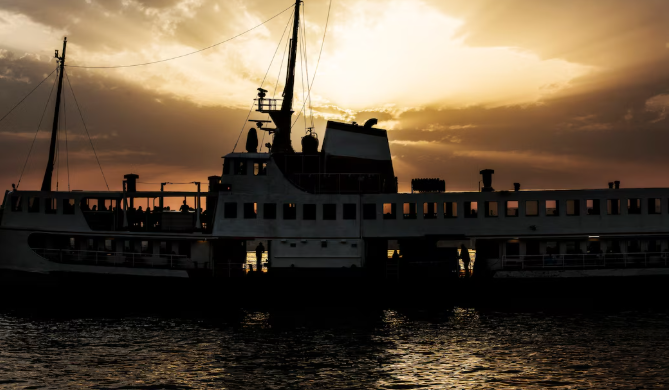
Fuel prices have spiked far beyond the Middle East. Shipping companies in Singapore, Rotterdam, and Mumbai are quietly rerouting where they can, paying premiums where they cannot. Although belief and certainty are two different things, investors appear to think a deal will eventually be reached. The market has priced in roughly a sentence’s worth of optimism.
What’s strange is how familiar all of this feels. The 1980s tanker war had similar choreography, similar denials, similar burning hulls drifting toward Omani fishermen who’d seen it before. History doesn’t repeat in the Gulf so much as it loops, picks up new participants, and keeps going. It’s still genuinely unclear if this loop ends with a genuine agreement or another protracted undeclared conflict. As of right now, the honest narrators are the ships.
